When we give people a tour of the apartment, the first thing they usually say when they first see our home office is something like:
"Wow I couldn't imagine working so close to my boyfriend. I mean I love him. But the thought of spending more than 30 minutes together in such a confined space would drive me crazy!"
See, I work from home most of the time with my girlfriend, and we share this tiny home office together to work from. This office is the tiniest room in our apartment. As it should be. We're not going to dedicate a large amount of space to work, even though the office is multi-purpose. It's about 4.7m × 2.5m × 2.5. It's smaller than a shipping container. To give you an idea of how small it is, I drew this scale drawing of me and my girlfriend working together on an average day of work.

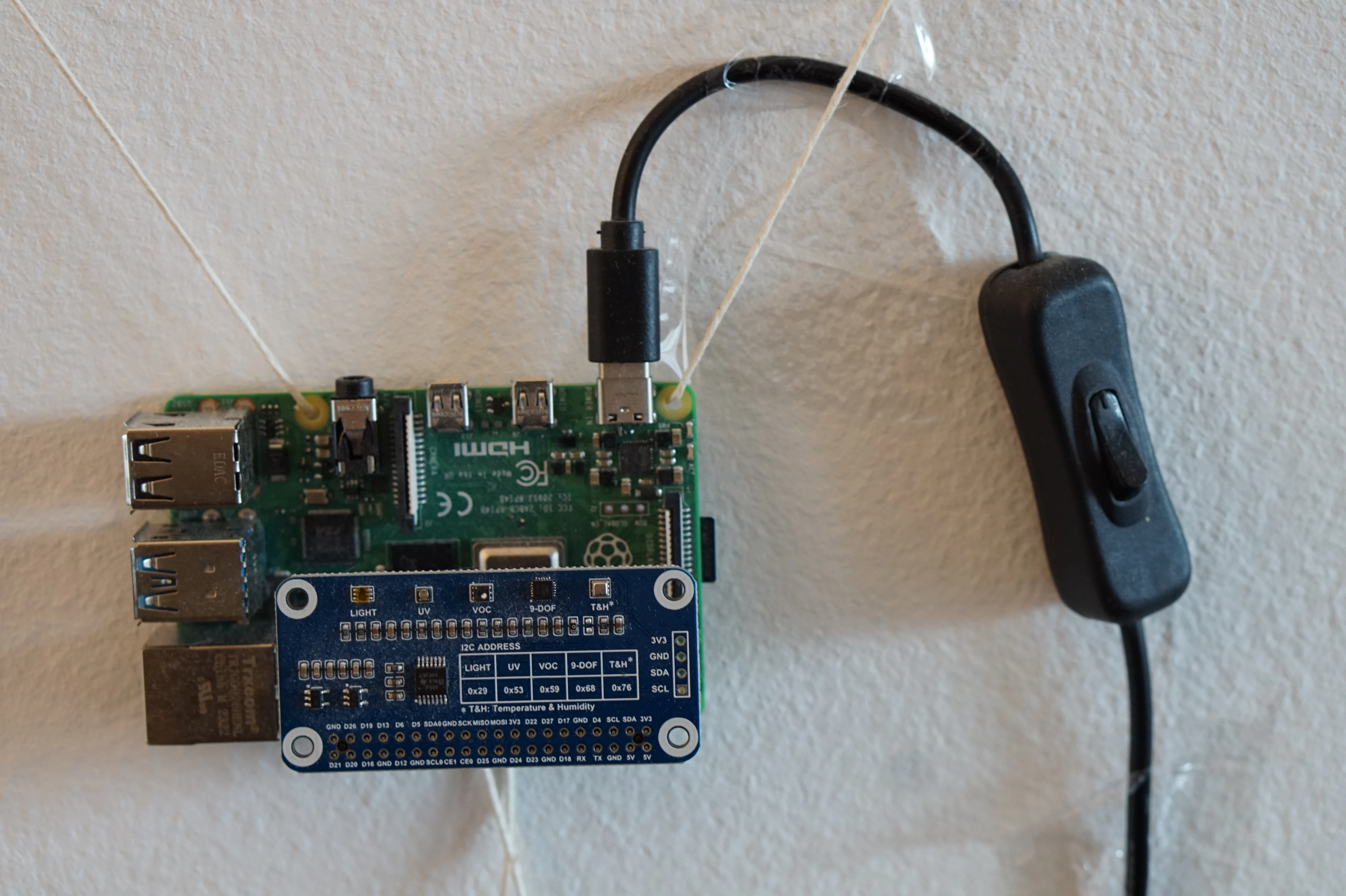
This got me wondering, how bad is the environment in our home office? We spend at least 8 hours a day cramped in this tiny room. So I haphazardly hung up this Raspberry Pi behind my desk with a Waveshare Environment Sensor HAT attached to it, and these are the reading I got for two months from January 15th to March 15th.
The temperature unit should be obvious, it's in Celsius. Humidity is in percentage, which means what percent of water vapor is in the air relative to the maximum amount of water vapor can potentially be in the air, given the temperature. Pressure is in hectoPascals, the SI unit. Volatile organic compound (VOC), measures the amount of "bad stuff" in the air. There isn't a unit of measurement for VOC for this device, it's just on a scale from 0 to 500. 0 being the best, and 500 being the worst. Finally light is measured in Lux, the SI unit.
And now the highs, averages, and lows for each measurement.
| Measurement | High | Average | Low |
|---|---|---|---|
| Temperature (°C) | 34.40 | 28.24 | 18.30 |
| Humidity (%) | 47.10 | 35.05 | 18.80 |
| Pressure (hPa) | 1023.50 | 1006.26 | 972.30 |
| VOC | 496.00 | 129.89 | 1.00 |
| Light (lux) | 796.00 | 39.92 | 0.00 |
I also thought it would be interesting to know what the averages were when we were awake and in the office. So I additionally took the averages for when Lux is greater than 10.
| Measurement | Average |
|---|---|
| Temperature (°C) | 29.36 |
| Humidity (%) | 33.76 |
| Pressure (hPa) | 1006.74 |
| VOC | 141.24 |
| Light (lux) | 72.78 |
For those of you who think in Celsius, those numbers might seem a little high, and my girlfriend suspects that they are. I don't think in Celsius. I'm American and I think in Fahrenheit. It could be that the sensor HAT is being heated somewhat by the Raspberry Pi, or that the sensor is not completely accurate, or both. I did take care to try to separate the sensor HAT from the Raspberry Pi as much as I could though.
To play around with humidity and test things, on the 21st to the 22nd, I tried leaving my laundry to dry in the office. As you can see humidity stayed high throughout the night there compared to the previous and following days. But that night isn't too different compared to some days when it was rainy out.
I don't have too much to say about pressure. That's mostly just affected by the outside air temperature in the area.
About some of those rapid VOC spikes in the graph. I assure you, I am not just standing up on my desk and farting directly into the Raspberry Pi sensor. That is not what I'm doing, I swear!
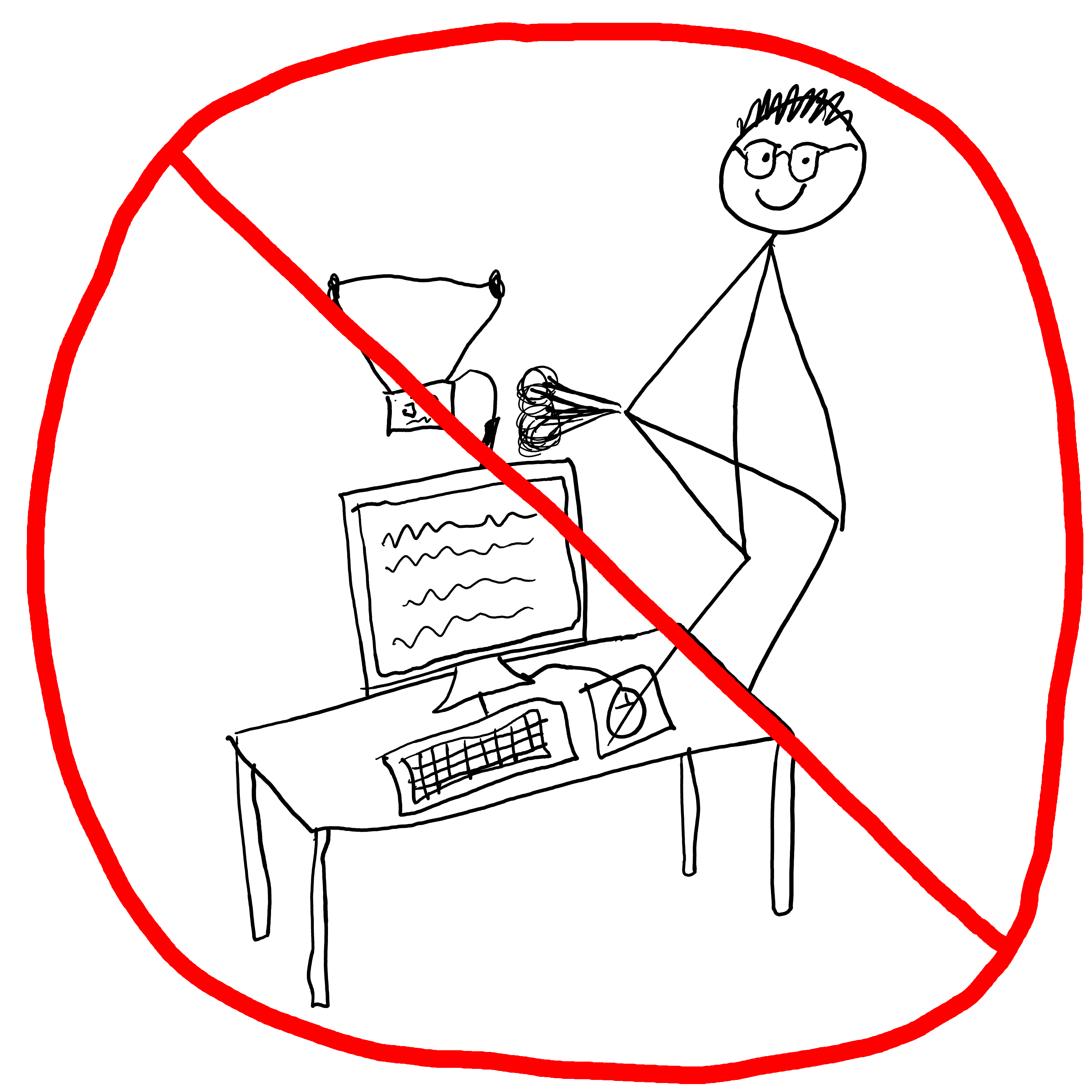
Sometimes that happens because I'm frying meat in the kitchen and left the door open, or cleaning chemicals permeating the air trigger the sensor. But also us just being in this enclosed space for an extended period of time without opening the window makes the air in this room bad, as you'd expect. When you see a sharp drop in temperature, and the VOC goes down too, you can tell that we've opened the window.
I think the light readings are somewhat interesting. You can tell when we get into the office in the morning on most days and open the blinds. Our window faces west, so you can also tell when the sun starts shining too bright during the day, and we have to roll down the shade. You can also tell when the sun wasn't shining, with majority of the light in our office coming from our lamps.
This sensor HAT also has a UV sensor. But I didn't include those readings because they weren't too interesting. The sensor is on a wall away from the window. I was wondering if it was even working, because there were barely any readings coming from it. Though I don't measure UV radiation that much so I didn't know what to expect.
I wanted to check that it was working, but I really didn't feel like waiting for a sunny day and taking it outside. So I took my girlfriend's UV nail lamp and shined it at the Raspberry Pi to check the sensor, and sure enough it worked.
So the UV sensor works, and so it should be expected that there's only a faint amount of UV light hitting the sensor during the day time. Given this, if you're a person who cares a lot about their skin, it might be a good idea to apply sunscreen, even when not directly in sunlight during the day.
You might have also noticed from January 24th, Saturday morning to January 25th, Sunday evening, the graphs are somewhat flatter in that time period. On that weekend, both me and my girlfriend were out of town.
What more to say about all this? Well first thing, while we do open the windows several times a day, maybe we could open them more. But these numbers were recorded in winter, so it's a balance between indoor air quality and the freezing cold outside. Secondly, this office is incredibly economically productive for such a small space. For some electricity, an internet connection, some coffee & water, and ~30 cubic meters of stale air, this space produces amazing software and health analyses!