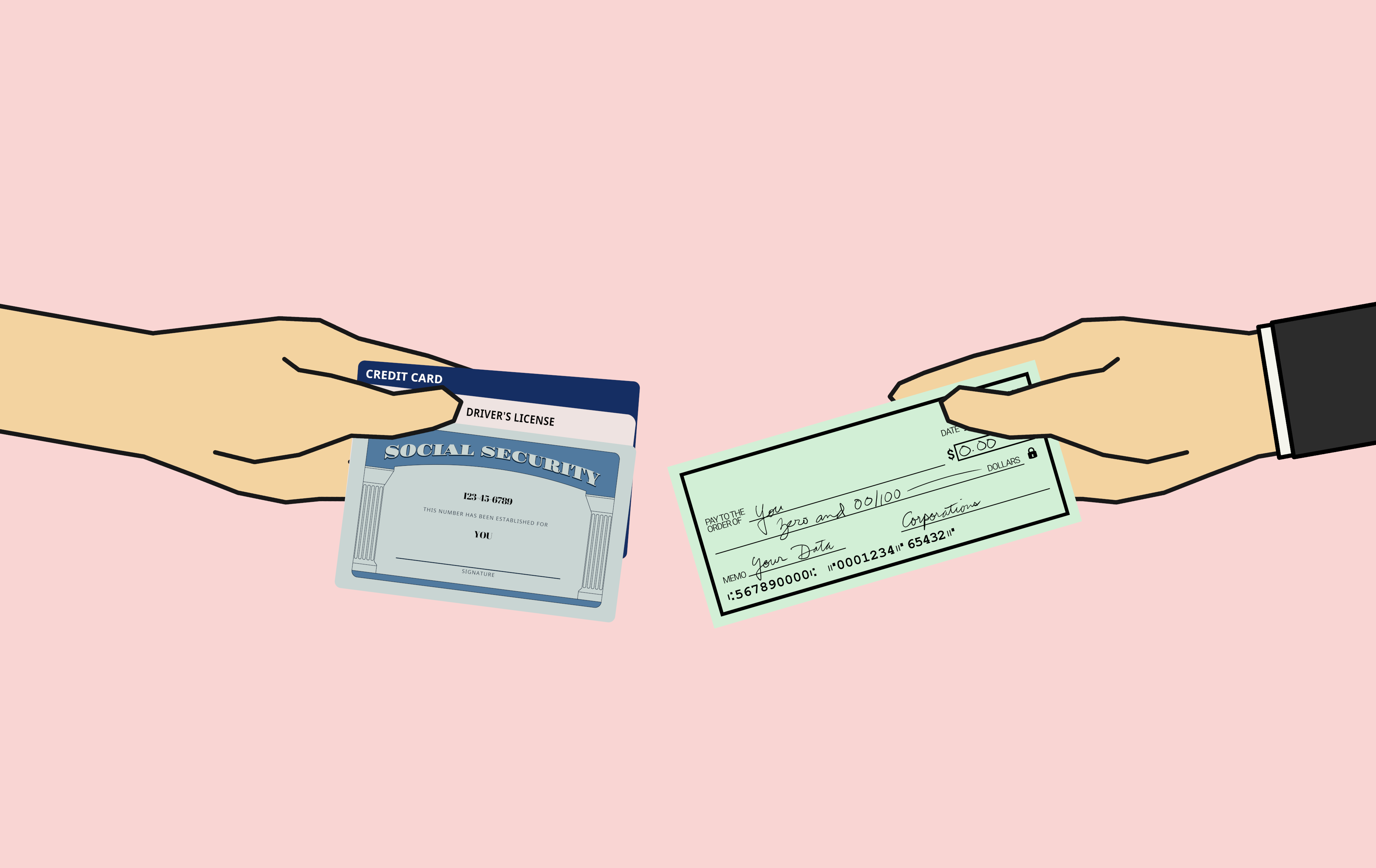
I was watching a friend use the computer the other day, and when he navigated to a website, a cookie banner appeared. There were two buttons of equal size, one that said "Reject All Cookies" and another that said "Accept All Cookies", and he clicked the "Accept All Cookies" button. And that blew my mind a little bit. The choices were equal in all ways, yet he chose the option to let advertisers track him with cookies instead of opting out. I asked why he clicked the "Accept All" button and he replied back "Does it matter?" I guess not in the grand scheme of things, so I let it go and we continued on with what we were doing. But that situation stuck with me.
Whenever I hear people make arguments on privacy, they usually say stuff about limiting a government's or corporation's eye on your personal life. And well that is an important thing, I think it's a little too nebulous of an argument for most people.
The arguments for limiting governments from spying on citizens are important, but for the average American, they don't really stand up too well against the retort "I haven't done anything wrong, I have nothing to hide!" And then some usual arguments against that are "You will wish you had taken privacy seriously when it's already too late." or "You wouldn't let the government spy on you going to the bathroom would you?" And those things are true, but they're just some vague unlikely future threat that most people don't really care about.
And the same thing with corporations tracking people, except people will say "I'm just one data point out of a million! Who cares if my data is collected!" or maybe "My data is getting sent to some Chinese company? Why should I care about what the Chinese do with my data?" And they're sort of right to ask those questions, and you can give more vague retorts to these similar to the ones above for government spying.
But let me give you a more concrete reason to not just hand over your data to governments or corporations: What are you getting in return for handing over your data? Like the situation I mentioned earlier watching a friend use a computer. If the cost giving up your data and keeping your private are nearly the same, why not choose to keep your data private? Let me give you some more examples other than this cookie banner dichotomy.
I often pay for things in cash when at brick and mortar stores. I have an ATM very close to my apartment, and I can easily get cash on the way out. To me, this is a very low cost to keeping my purchasing information a little more private from corporations who link debit card purchases to your name, address, e-mail, phone number, etc. Still, it's not very easy to live with cash only, and I don't. But in the places where it's very easy for me to pay with cash instead of card, I pay with cash.
Let me give you another example. My girlfriend wanted to buy a vacuum robot. Our apartment gets dusty of course, and it's annoying to vacuum every week. I was concerned with the data privacy of getting a vacuum robot, wouldn't want pictures of yourself on the toilet ending up on the internet would you? If we were to get one of those iRobot vacuums apparently you can opt out of data collection. But we didn't even have to worry about finding all places to opt out of having your data vacuumed up. I've taken AI classes in college and I know that simultaneous localization and mapping (SLAM) algorithms can be done on the device itself without an internet connection, computers these days are cheap and powerful enough. So we bought a vacuum robot that doesn't need to be connected to the internet. Sure we don't have some of the fancier cloud features, but in addition to saving our privacy, we also don't need to worry about losing features we paid for if the company goes bankrupt.
So here's my argument for privacy: You have choices every day on whether to give up your privacy or whether to keep your privacy. A lot of these choices are equal in cost, and some of them require no additional effort. I'm not asking you to go off the grid, burn all your cards, and live in a cabin in the woods, but you do have choices. For me personally, I value my data privacy a lot more than the average person, so the choices that I make for myself might not be worth it for you. Maybe you live nowhere near an ATM, maybe you really really like the cloud features for a vacuum robot. That's okay! But at the very minimum, when all things are equal or it requires little to no effort, I'd encourage you to keep your data private.
There are also browser addons that gets rid of cookie banners.